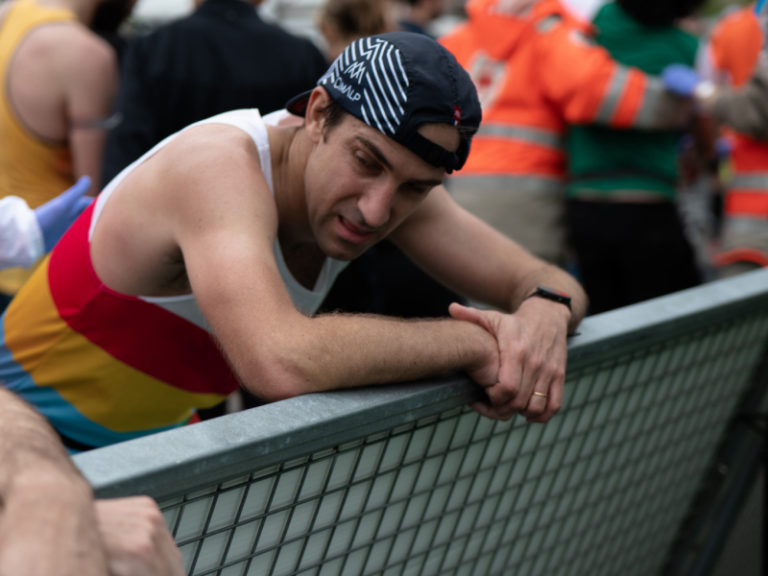

If you’re a runner, you’ve lived this moment. You don’t feel like going for a run. Then somehow you drag yourself out the door. And when you get back home, it’s, “Of course I did the right thing. That felt amazing!” Endorphins, sometimes called endomorphins, have already kicked in, their job is simple: create pleasure.
Contents
What are endorphins?
Endorphins are the pleasure hormone. They make us feel good and can sometimes dial down pain. Sometimes enough to push us beyond our usual limits in training or racing.
They’re a natural painkiller, similar to morphine in the way they act. They’re produced in the pituitary gland and the hypothalamus, two glands that act on the brain in an area that receives opioids.
The effect of endorphins is twofold. They’re both numbing and mood-lifting. That means you feel less pain during endurance training or competition, and you get that deep sense of well-being. It’s often what hits you when you cross a marathon finish line, for example.
Runners also notice that a run helps you decompress. Endorphins have an anti-anxiety effect and tend to flush out stress.
How long does it take to produce endorphins?
It’s generally accepted that you need to run for at least around 30 minutes to produce enough endorphins to actually feel them. Increase duration and intensity and the sensation ramps up even more. Ideally, doing interval training helps maximize endorphin release. A simple home recipe: run a hill session of 12×20 seconds hard, then recover by jogging back down to the start. You’ll get a big endorphin hit in very little time.
Endorphin levels stay elevated for 30 minutes to 1 hour after the effort.
Is running the best sport for producing endorphins?
Endurance sports like cycling, swimming, cross-country skiing, ski mountaineering (ski touring), or Nordic walking all help you produce endorphins. In general, you need at least about 30 minutes of continuous effort, or a bout of intervals.
There isn’t a comparative study between sports to determine whether one triggers more endorphin secretion than another.
Be careful not to overdo it
Because the first effect of endorphins is pain reduction, they can mask muscle, tendon, or bone injuries that may flare up hard once you’re at rest. If you’ve been injured recently, be careful not to get carried away by the runner’s high. Stay clear-eyed about what your body can handle.
Beyond that, a form of addiction can develop, bigorexia. You start needing your daily dose to feel good, and that’s where the vicious cycle begins. You train more, even with pain, partially masked by endorphins and dopamine. Over time, it can lead to chronic pain and deep fatigue, plus a drop in performance.
So stay reasonable and pay attention if your ramped-up training starts affecting your personal or professional life. Running is part of your balance, keep that balance steady with enough activity to feel good, but not so much that it breaks you down.
Smart endurance training also needs variety, not just big weekly mileage.