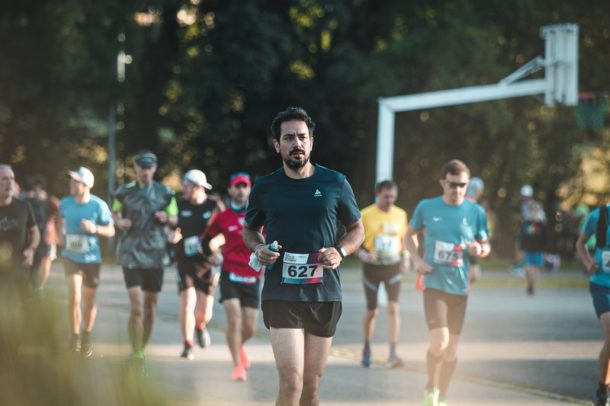

Signed up for your first 10K? Or you have already raced the distance and you want to drop your time?
A 10K is approachable, but it is still demanding. From how you taper in the final week, to choosing the right race pace on the day, to recovering well after the finish, a few smart habits can make a real difference.
In this article, you will find our best tips to prepare for your 10K, avoid the most common mistakes, and give yourself the best chance of crossing the finish line feeling strong, whether your goal is to finish or to set a new personal record.
Contents
- How to train well in the 3 months before your 10K
- How to prepare for your first 10K in the week before the race
- Nutrition before the 10K
- Warm-up: a key step before a 10K
- What pace should you run for your first 10K?
- Do you need to fuel or drink during a 10K?
- Mistakes to avoid in your first 10K
- How to recover after your first 10K
- When to start training again after a 10K
- In summary
How to train well in the 3 months before your 10K
A great 10K does not get built in race week. Ideally, plan 8 to 16 weeks of training so you arrive ready on race day.
To improve over 10K, your training should be varied and develop several key qualities:
- Easy endurance runs : these help boost your aerobic base, strengthen your cardiovascular system, and build mileage without piling on too much fatigue.
- High-intensity interval sessions : these improve your speed, aerobic power (VO2max), and your ability to sustain hard efforts. For example, 400 m, 500 m, or 600 m repeats run faster than your 10K pace.
- 10K pace workouts : essential for learning how your goal pace feels and how to hold it. It is one of the best ways to show up on race day knowing exactly how fast to start and how to manage your effort.
- Recovery and consistency : progress is not just stacking tough sessions. Rest days and easy runs are non-negotiable to absorb training and reduce injury risk.
This mix of endurance, speed, and specific race-pace work is the most effective way to prepare for a first 10K or to improve your personal best.
Following a structured 10K training plan is still the simplest way to make steady gains while keeping your training load under control and minimizing the risk of injury.
How to prepare for your first 10K in the week before the race
With one week to go, the goal is no longer to get fitter, it is to recover.
Cut your training volume slightly while keeping a touch of intensity to stay sharp. A short session at 10K pace a few days before the race is usually enough.
The idea is simple: arrive rested, without losing your rhythm.
Nutrition before the 10K
Do you need a carb load before a 10K?
Unlike a half marathon or marathon, a full-on carbohydrate loading strategy is not essential before a 10K, but it can still help.
In the days leading up to the race, solid nutrition habits are worth it: hydrate well and slightly prioritize carbohydrate-rich foods (rice, potatoes, quinoa, bananas, etc.). You will top up your glycogen stores and start with plenty of energy.
It is also a great pre-race routine to build for any competition.
The day before the 10K: keep it simple
The day before the race, do not change your habits.
Keep drinking regularly and choose simple meals that are high in carbs and easy to digest. The goal is not to eat more than usual, it is to arrive with enough energy and zero stomach issues.
And if you sleep poorly the night before, do not stress. The most important nights are often the two or three nights before race day.
What to eat before your first 10K
On race morning, stick with a breakfast you already know and digest well.
For example, you could choose:
- Bread or toast with jam or honey
- A banana
- Applesauce
- Your usual drink (coffee, tea, etc.)
Also, make sure you are well hydrated before the start.
Warm-up: a key step before a 10K
A 10K is a hard effort. A proper warm-up helps you feel ready from the first few strides.
Plan for:
- 15 to 20 minutes of easy jogging
- A few running drills
- 4 to 5 progressive strides of about 100 meters
You will hit the start line with sharp, confident sensations.
Right before the gun, you can also take an energy gel or a small energy puree if you are used to it. As always, do not try anything new on race day.
What pace should you run for your first 10K?
If there is one tip to remember, it is this: stick to your goal pace.
Do not start too fast
The most common mistake is going out too hard because of the adrenaline. But the few seconds you gain in the first kilometer can cost you big time at the end.
At the start, it is normal for the pace to be a little quick because of the crowd and the race atmosphere. What matters is settling back into your planned pace quickly and holding it through the midpoint.
The key moment: from kilometer 5 to kilometer 9
Most 10Ks are decided between kilometers 5 and 9.
Your legs start to feel heavy, breathing gets tougher, and the urge to back off shows up. That is exactly when you need to lock in on your pace. The goal is to tolerate the discomfort as long as possible without breaking your rhythm.
If you feel you cannot hold it, ease off by 5 to 10 seconds per kilometer. The impact is usually small if it helps you regain control of your breathing and then build again.
The final kilometer
The good news? Many runners find a second wind in the last kilometer, even if they felt crushed at kilometer 8.
Knowing the finish line is close is often freeing, you realize it is only a few minutes of effort left before you can recover. And if your watch shows you are still on track to beat your PR or hit your target time, you usually find that extra gear.
Do you need to fuel or drink during a 10K?
Should you fuel during a 10K? It depends on your level and the weather conditions.
If you run under 50 minutes and temperatures are moderate, you typically do not need to drink during the race.
On the other hand, if it is hot (above 20°C, about 68°F) or your race time is over 50 minutes, taking a few sips at an aid station can be a smart move.
Nutrition-wise, you generally do not need a gel during the effort if you ate well before the race.
Mistakes to avoid in your first 10K
Starting too fast
This is the number one 10K mistake.
Even if your first kilometer is slightly quicker than planned, make sure you settle back into your target pace fast so you do not blow up a few kilometers later.
Testing brand-new gear
Shoes, kit, socks, or accessories, everything should be tested in training first.
If you invested in carbon-plated racing shoes, make sure you have worn them for several sessions before race day.
How to recover after your first 10K
Once you cross the finish line, do not stop abruptly.
Walk for 5 to 10 minutes to let your heart rate come down gradually.
Then focus on the three pillars of recovery:
- Hydration
- Nutrition
- Sleep
These are what will help you bounce back quickly and feel good again.
When to start training again after a 10K
The first few days should be dedicated to recovery.
Depending on how you feel, prioritize rest or very easy runs.
Most runners can gradually return to normal training about five days after the race.
And if you feel you still have room to improve, or you mismanaged your pacing, why not schedule another 10K in one or two months? You will be able to cash in on the fitness you built during your training block.
In summary
Nailing your first 10K comes down to a few simple principles: show up fresh on race day, stick to your goal pace, avoid the classic mistakes, and prioritize your recovery.
Whether your goal is simply to finish your first 10K or to set a new personal best, smart pacing and good race execution are often what make the difference.
So trust yourself, stay patient in the early kilometers, and enjoy the experience. Have a great race!