You’re probably familiar with the old story that beer helps you recover after exercise. That is why so many runners enjoy a cold one after training or a race, most often with friends. Beer does contain some nutrients, but alcohol also comes with drawbacks. So, when it comes to post-workout recovery, is beer a myth or the real deal?
Contents
The benefits of beer after exercise
Beer is made from water, malted barley and often hops, sometimes with other grains or plants as well. That means it provides carbohydrates, which can help refill glycogen stores, plus small amounts of vitamins B3, B5 and B6, magnesium and potassium.
On paper, that gives beer a few arguments in favor of recovery and hydration.
But what about the alcohol?
Beer contains alcohol, most often between 4% and 9% ABV. And if you go for a pint, the amount of alcohol quickly becomes significant. Contrary to popular belief, beer does not hydrate you. In fact, because of the alcohol, it has a diuretic effect. That means your body gets rid of more water and salt than usual, which is why you tend to urinate more.
Alcohol also slows down protein synthesis, a key process for repairing and rebuilding muscles. So alcohol should not be the first thing you consume after a workout or race, when your body is really looking for nutrients and carbohydrates to kick-start recovery. The second issue is that alcohol provides empty calories, with virtually no useful vitamins or minerals, and those calories do nothing to help your muscles regenerate.
Finally, its high glycemic index can help restore carbohydrate stores quickly, but it can also trigger a blood sugar spike and contribute to weight gain if you drink too much. After a long race, that is less of an issue, but in everyday life excess carbs are stored as fat.
Beer after exercise, good for your mood?
Recovery is not just physical, it is mental too. Sharing a good moment with friends can do a lot for your well-being, so there is no need to ban it completely. Just make sure you drink properly, meaning water, right after training or racing, and eat something so you are not recovering on an empty stomach.
Among the best post-workout foods, and definitely before any beer, make sure you get carbohydrates such as pasta, rice or wholegrain bread, plus protein such as lean ham or a protein bar.
And what about alcohol-free beer, is it good for recovery?
We can see where you’re going, you really want that beer. In that case, alcohol-free beer is clearly the best option. More and more brands are producing alcohol-free beers, but many still add glucose syrup.
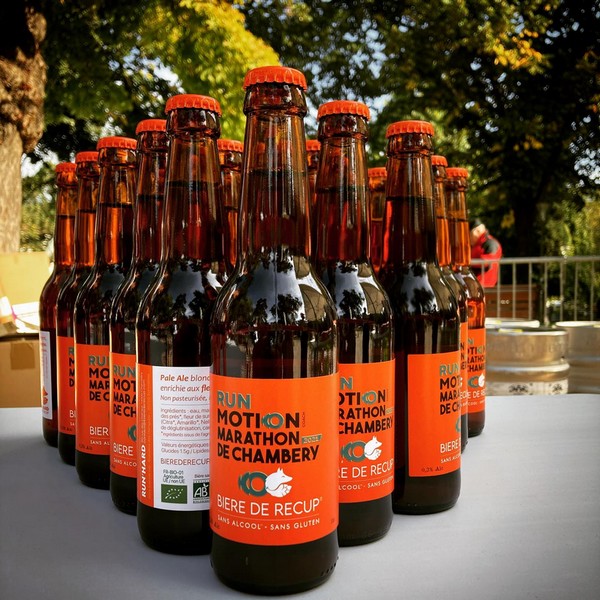
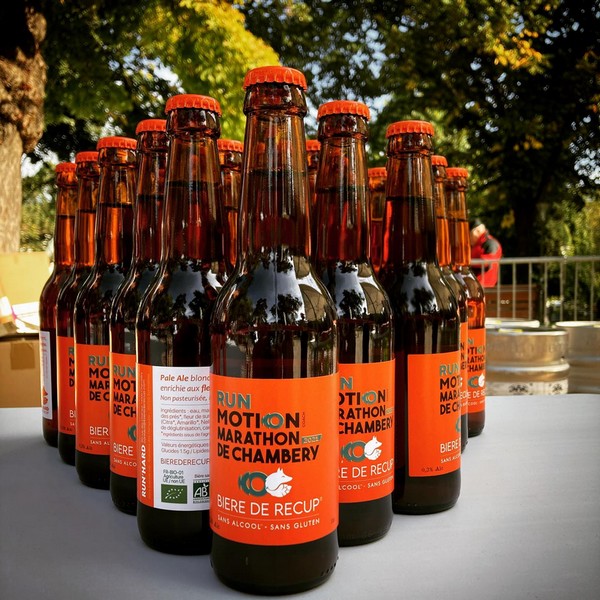
The healthiest option is the craft Run’Hard recovery beer, which comes from the Alps, just like us. The two big strengths of this alcohol-free drink are its low glycemic index, with no added sugars, and the fact that it is one of the lowest-calorie beers on the market. Herbs are also added to create a unique flavor and support recovery.
Run’Hard is already well known in the trail running and outdoor sports community, and we invite you to give it a try!
To sum it up, drinking beer after exercise is possible, but in moderation, preferably alcohol-free and only after you have eaten. That is the exact opposite of the Beer Mile, where you drink beer while running four laps of a track, in serious quantities, 4 x 330 ml, and with an alcohol level above 5% 😆 Rumor has it that one of the founders of your favorite app once held the French Beer Mile record…
Photo credit: Run’Hard, RunMotion Coach at the Chambéry Marathon