On a triathlon start line, stress rarely comes from fitness alone. More often, it comes from a logistical detail, bike shoes left in the car, swim goggles lost at the bottom of the bag, or a wetsuit you have not tested in months. Packing your triathlon bag will not add watts or cut seconds per mile, but it prevents the one thing that can wreck months of training, the avoidable surprise.
Packing your triathlon bag is not some admin box to tick. It is a step that deserves as much planning as your training plan, and it matters even more as the race distance gets longer.
Contents
Packing your triathlon bag is part of performance
A triathlon combines three disciplines, which also means three times the gear to manage, transport, and organize compared with a standard running race. The more items you have, the higher the chance of forgetting something or making a mistake, especially with pre-race nerves when focus is never at its peak. Packing your triathlon bag methodically, checked and organized, lets you arrive on race day with a clear head, fully available for execution, pacing, and performance.
Mandatory gear, never underestimate it
Every event comes with a baseline of mandatory gear, often checked by officials before the start or during the race. Your triathlon wetsuit or tri-suit, a certified helmet for the bike, your race bib and timing chip are always on the list. The helmet deserves special attention, many triathletes find out on race morning that an official rejects their helmet because the strap is poorly adjusted or the model is not approved for competition. Check this several days before race day, not the night before, and you avoid that kind of last-minute disaster.
Gear by discipline
Each discipline has its own specific equipment, so it is crucial to pack your triathlon bag carefully and check gear sport by sport, instead of throwing everything together.
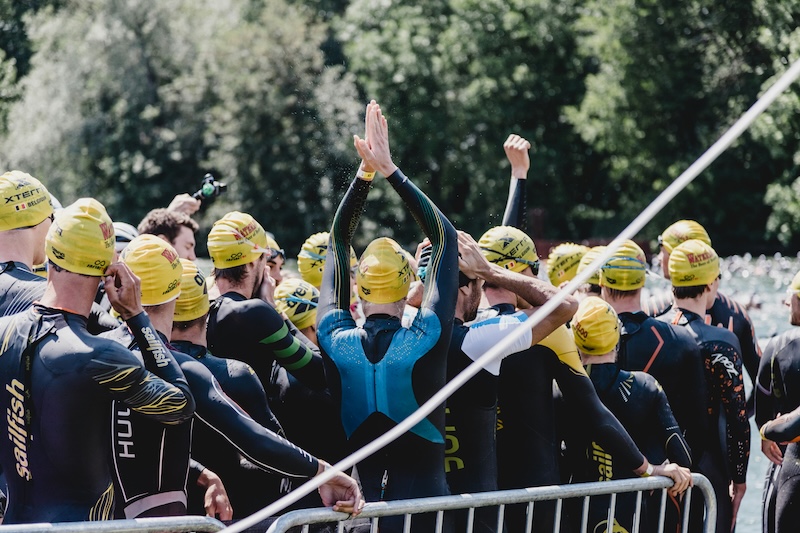
For the swim, goggles are the most critical item. It is strongly recommended to carry a second pair in your bag, either brand new or already tested, in case a strap snaps or fogging becomes unmanageable on race day. The swim cap is usually provided by the organizer, but wearing a personal cap under the official one can add a bit of warmth in cold water. If you are sensitive to cold, silicone earplugs reduce discomfort and the dizziness some athletes feel when getting out of the water.
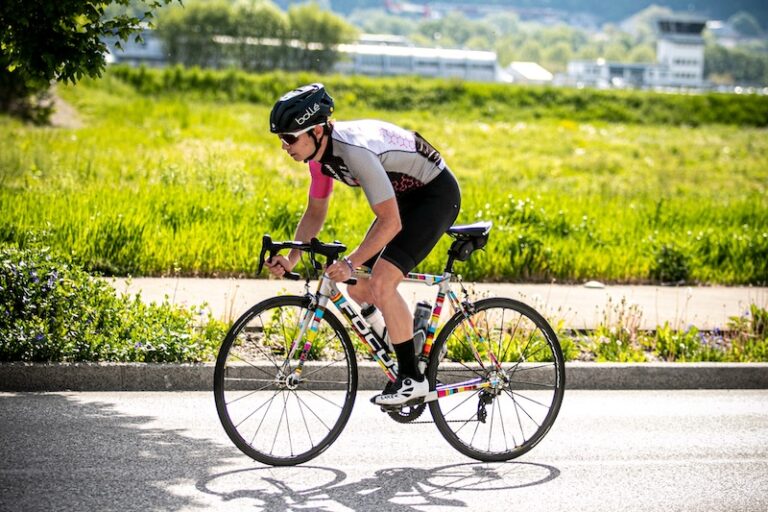
For the bike, the gear goes far beyond the bike itself. Your flat kit (tube, tire levers, pump or CO2 inflator) needs to be checked and working, ideally tested once in real conditions before race day instead of sitting unused in your bag. Your bottles should be filled and securely mounted, aligned with your planned fueling strategy for endurance performance. Your cycling shoes, if you leave them clipped into the pedals to speed up transitions, must be practiced several times in training with that setup before you try it in a race.
For the run, your running shoes should be a well-broken-in model, never a brand-new pair worn for the first time on race day. A cap or visor is a simple win in hot conditions, and lightweight sunglasses help reduce eye strain over long-distance formats. A quick-lace system with elastic laces remains one of the easiest ways to save time in transition without adding complexity to your kit.
The small details that truly change your race
Some items that seem minor can have an outsized impact on comfort and race-day execution. Vaseline or talc, applied to friction areas (armpits, inner thighs, feet), prevents chafing that can become a real limiter in a long-distance triathlon. Sunscreen, applied before the start and sometimes reapplied in transition on longer races, prevents sunburn that can feel brutal in the days after the event. The gels, bars, or sports drinks you plan to use on the bike and run should be prepared and placed somewhere accessible, never improvised at the last minute based on whatever the organizer provides, which does not always match what your gut typically tolerates.
A waterproof transition bag, or at least a plastic bag to separate wet gear after the swim, makes post-race bag management much easier, especially if the weather turns rainy.
Organize your triathlon bag, do not just fill it
How you pack your bag matters almost as much as what you pack. The most effective method is to organize your gear by discipline and in the order you will use it, what you need first should be easiest to reach, not buried at the bottom. That mirrors the same logic used to set up the transition area itself, a well-packed bag ahead of time supports a smooth transition on race day.
Pack your triathlon bag the night before, in a calm moment, rather than scrambling on race morning, it is the simplest and most effective advice. A written checklist, even a basic one, helps you verify each item step by step instead of relying on memory when pre-race stress is running high.
Plan for the weather and bring a backup option
What you pack depends not only on race distance but also on the forecast, which can shift quickly between booking your accommodation and race morning. A packable windbreaker that fits easily into a pocket or transition bag can be a game-changer if it is rainy or windy on the bike. Arm warmers or a light beanie help you handle a chillier-than-expected early morning without adding much bulk. On the other hand, if serious heat is expected, planning a cap you can soak with water, or even a few ice cubes tucked under your tri-suit in transition, can make a noticeable difference in comfort during the run.
In summary, here is what to remember
Preparing your triathlon bag and gear is not a side task in triathlon prep, it is a key condition for starting relaxed, without wasting mental energy on details you could have handled in advance. By checking mandatory equipment early enough, organizing your bag by discipline and in order of use, and planning for the weather, every triathlete, beginner or experienced, gives themselves the best chance of success before even stepping into the water. This kind of preparation matters even more when it is paired with solid management of transitions on race day.