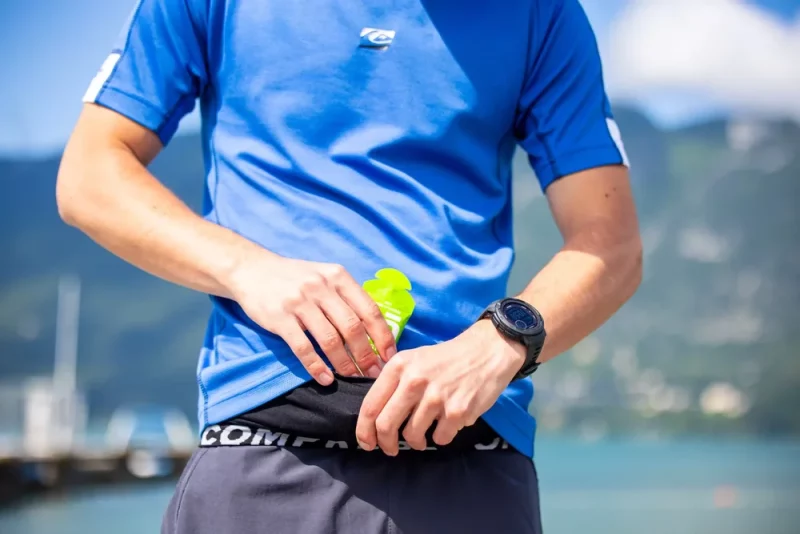
Nutrition during a triathlon is often what makes the difference between a race you control and a brutal survival mode finish. Whether you are training for a sprint triathlon, Olympic distance, a Half Ironman, or a full Ironman, eating and drinking well before, during, and after the effort is essential to keep your energy high, avoid cramps, and maximize performance.
In this complete guide, you will learn how to manage triathlon fueling and hydration with practical tips, real examples, and the biggest mistakes to avoid.
Contents
- Why is nutrition so important in triathlon?
- Nutrition before a triathlon: build your energy stores
- Nutrition during a triathlon: what to eat and drink?
- Nutrition by discipline
- Example nutrition strategy for a long-distance triathlon
- Common triathlon nutrition mistakes
- How to test your nutrition before a triathlon?
- Plan your triathlon training with RunMotion Coach
Why is nutrition so important in triathlon?
The triathlon combines swimming, cycling, and running over several hours of effort. Your body burns a huge amount of energy, and glycogen stores drop fast when your nutrition plan is not dialed in.
On long-course formats, a poor fueling strategy can quickly impact both performance and recovery.
A bad nutrition strategy can lead to a major energy crash, the famous “wall”, plus GI issues, cramps, dehydration, or a serious drop in performance late in the race.
On the other hand, a smart triathlon nutrition plan helps you keep steadier energy, improve endurance, recover faster after the effort, and reduce the risk of blowing up.
Nutrition before a triathlon: build your energy stores
The days leading up to race day
In the 2 to 3 days before your triathlon, the goal is to gradually top up muscle glycogen stores.
This phase matters even more before a long-distance triathlon or an Ironman, where energy demands are very high.
Focus mainly on complex carbohydrates :
- rice
- pasta
- potatoes
- quinoa
This helps you maximize energy reserves before the race. Solid hydration and simple, easy-to-digest meals are also key in the days before the start.
On the flip side, it is best to avoid very fatty foods, alcohol, too much fiber, and anything new you have never tested before.
Race morning breakfast
Your last meal should be about 3 hours before the start.
The goal is to provide enough energy without upsetting your stomach before the race.
Here is an example of a complete breakfast for a long triathlon effort: bread or oats for carbs, a banana, a bit of honey or jam, a yogurt or plant-based drink, plus coffee if you are used to it.
Nutrition during a triathlon: what to eat and drink?
Hydration
Even mild dehydration can crush performance.
During a triathlon, it is recommended to drink regularly, ideally between 500 and 750 ml per hour depending on heat and your sweat rate. A drink with sodium and electrolytes is especially useful on long efforts. In practice, small sips every 10 to 15 minutes usually work better than large, spaced-out drinks.
Drinking consistently also helps you absorb the carbohydrates you take in during the race.
Fueling
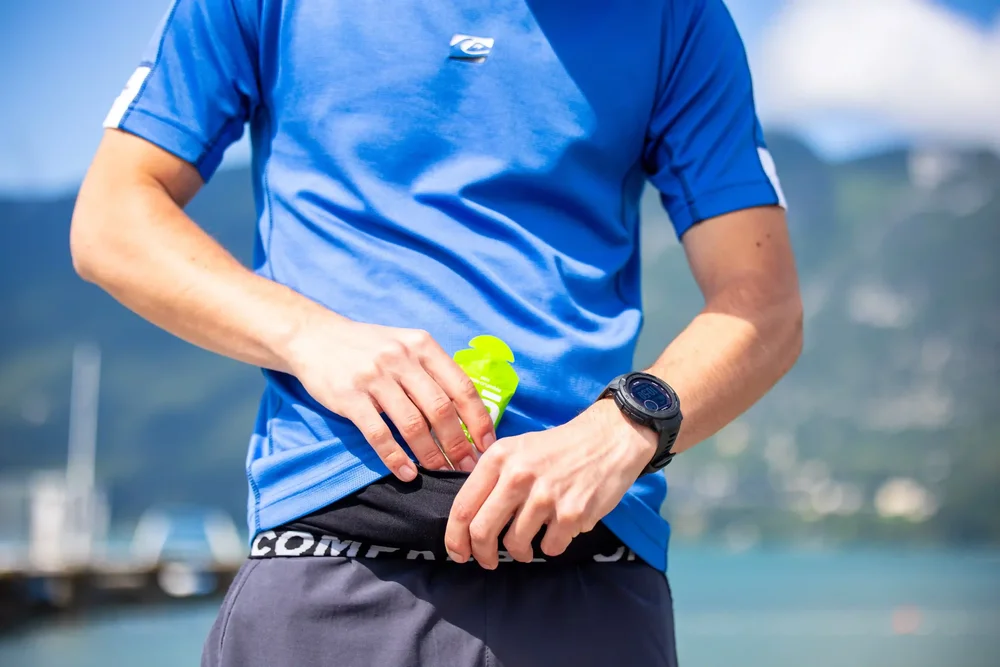
Your main fuel during endurance exercise is still carbohydrates.
To keep energy steady, you need regular intake throughout the race.
Recommended target:
- 30 to 60 g of carbs per hour on short formats
- up to 90 g/hour on long distance with gut training
The best options during the effort are usually energy gels, isotonic sports drinks, fruit chews, easy-to-chew energy bars, bananas, or applesauce pouches. The most important thing is choosing products you have already tested in training so you avoid nasty GI surprises on race day.
Nutrition by discipline
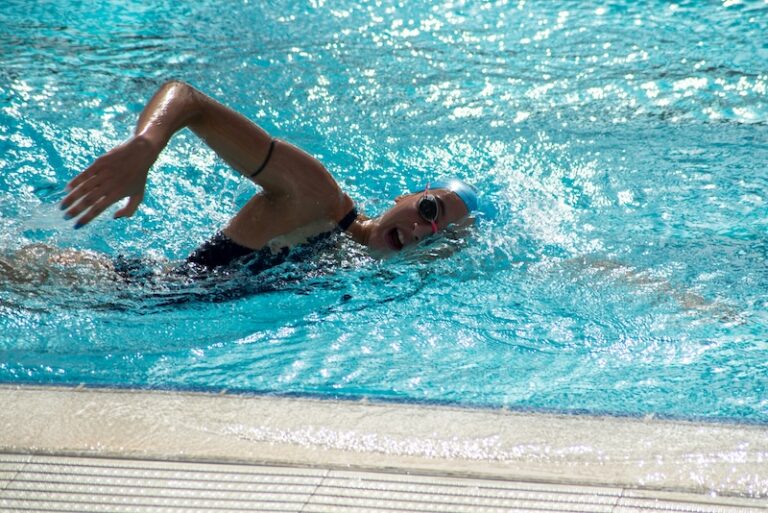
Nutrition during the swim
Eating is basically impossible during the swim, so the real work happens before the start.
On long distance, taking a small energy gel right before you enter the water can be a smart move.
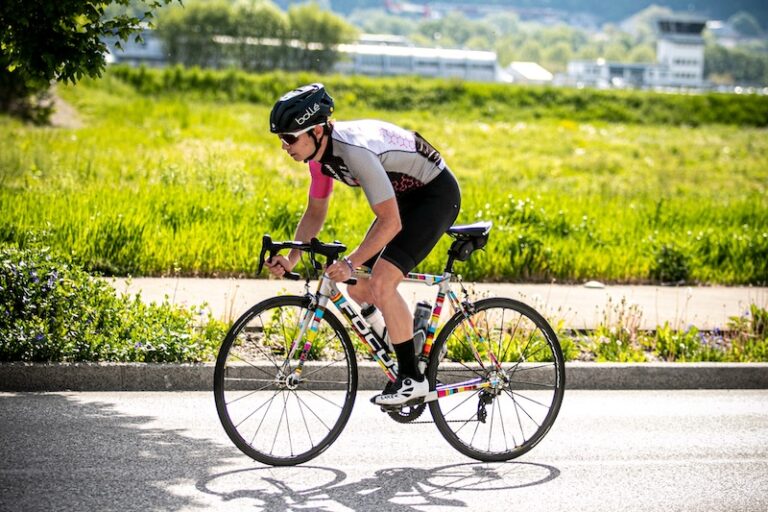
Bike nutrition: the key moment
The bike leg is the best time to fuel properly.
Why?
- more stable intensity
- easier digestion
- easy access to bottles and nutrition
On an Ironman, your success in the final marathon is often built on the bike.
Match your fueling to intensity: the digestion trick
Digestive tolerance changes a lot with intensity. In triathlon, especially on the bike, pace changes (surges, descents, climbs) directly affect digestion.
A simple rule can help: go with liquids or gels during hard efforts or descents, then save solid foods for steadier moments like the start of a climb or flat rolling sections. This often makes fueling easier to handle.
The goal is to reduce GI distress and improve energy absorption from start to finish.
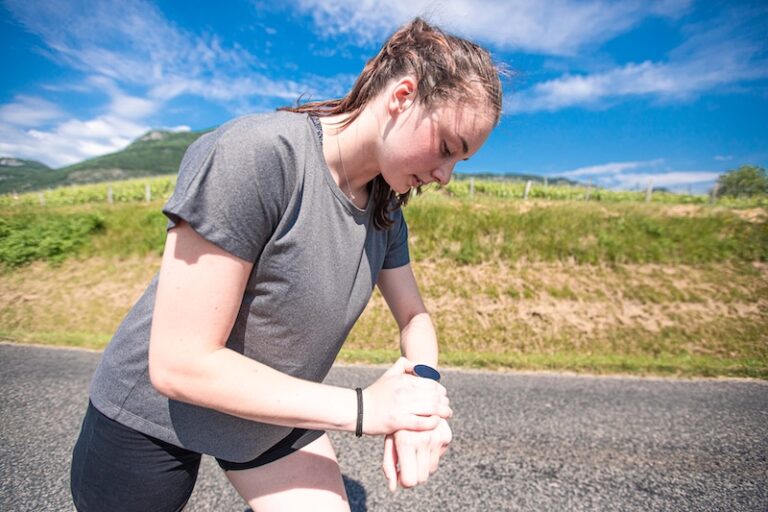
Nutrition on the run
On the run, digestion gets tougher. Prioritize:
- easy-to-digest gels
- energy drinks
- frequent fueling in small amounts
The goal is to avoid energy dips while keeping stomach issues under control.
Example nutrition strategy for a long-distance triathlon
Before the race
- Breakfast 3 hours before
- Regular hydration
- 1 gel 10 minutes before the start
Bike
The bike is usually where it is easiest to hit your carb and fluid targets. The key is to fuel proactively, not when you start to feel hungry.
- 60 to 90 g of carbs per hour
- 1 bottle of isotonic drink per hour
- alternate solid + liquid
Run
Once you are running, digestion often becomes more sensitive. It is better to take small amounts more frequently.
- 1 gel every 30 to 40 minutes
- water at every aid station
- electrolytes in hot conditions
Common triathlon nutrition mistakes
- Trying a new product on race day : using a gel or drink you have never tested in training. The rule is simple, nothing new on race day.
- Waiting until you are hungry or thirsty : when hunger or thirst shows up, it is often already too late. You need to anticipate fueling and drink consistently throughout the effort.
- Ignoring sodium : salt losses can be significant, especially in summer. Electrolytes play a major role in preventing cramps and maintaining hydration.
How to test your nutrition before a triathlon?
Your nutrition strategy needs to be trained like everything else.
During long training sessions:
- test your gels and drinks
- train your digestive system
- measure your fluid needs
- write down what works
These sessions help you identify what you tolerate best and gradually fine-tune your plan before race day.
Plan your triathlon training with RunMotion Coach
Nutrition is a core part of performance. But if you want long-term progress in triathlon, you also need smart, structured training.
The RunMotion Coach app helps you follow a personalized training plan based on your goal, level, and availability. Whether you are preparing for your first triathlon or an Ironman, you get adaptive coaching and accurate tracking of your progression.
Finishing your triathlon strong is not only about training. Proper nutrition before, during, and after the race is essential to keep your energy up and prevent a late-race collapse.
The most important thing is to build a personalized strategy and test it in training. Hydration, carbs, electrolytes, and recovery are the pillars of a successful endurance performance.
Combine structured training with mastered race fueling, and you maximize your chances of hitting your goals on race day.