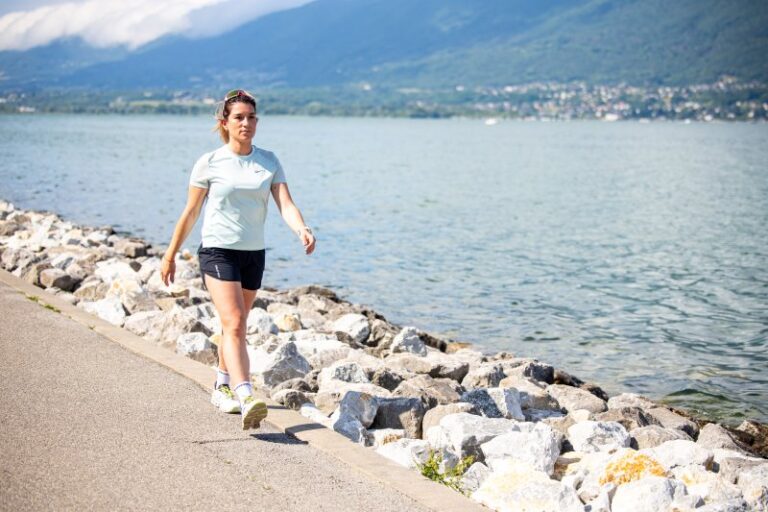

The holidays are over, and it is time to get back to running. Have you eaten a lot and moved very little lately? Don’t panic. It is important to enjoy the festive season and take time to unwind. However, your return to running should be gradual to avoid injuries. Here are a few tips to help you start training again after the holidays, stay safe, and make your New Year’s resolutions stick.
Contents
Get back to healthy habits
During the holidays, meals are usually high in calories, fat, and sugar. Getting back into sport after this period also means returning to a healthy, balanced diet that supports your training. Once the chocolate boxes are empty, there is no need to buy more. You have probably had enough to last you for a few months.
There is no need to start a diet either. It could even be counterproductive for your body and leave you exhausted very quickly. Your body already needs to readjust to your usual eating habits: carbohydrates, vegetables, protein, and fewer excessive sugar intakes. Your portion sizes should be adjusted too.
Finally, do not overlook hydration, even when temperatures are low. As a guide, your body needs around 1.5 litres of water per day.
Make sure everything feels right
Before getting back into sport after the holidays, check that your body is ready. For a few days, or perhaps even a few weeks, your body may not have been moving the way it normally does. It is important to make sure everything is working well and that you are not feeling any pain. This is a great time for a check-up with a physiotherapist or osteopath.
If you still feel tired, your body has probably not fully recovered yet. Returning to exercise too soon can increase your injury risk. Get back into a solid sleep routine, around eight hours a night, and within a few days your body should feel fully rested. Then you can start training again.
Getting back into sport after the holidays: slow and steady
Now that you have laced up your running shoes and are ready to train again, let’s look at how to reintroduce intensity progressively. Your first runs should be at a very low intensity, at an easy aerobic endurance pace. Running at this pace will help your body readjust faster than jumping straight into hard training sessions.
This will help you avoid running injuries such as tendinitis, iliotibial band syndrome (ITBS), shin splints, muscle strains, and joint problems. It will also help you burn off some of the holiday fat more quickly. 😉
If your training plan includes an intense workout but you do not feel ready to resume it yet, replace it with an easy run and a few progressive strides.
A few tips if you are struggling to get motivated
Sometimes, a break can make us lose motivation. It can be hard to get back into the routine you had before your time off, and winter conditions do not make it any easier. To help you find the motivation to start training again after the holidays, the best solution is to plan ahead. Set your return date and schedule the days when you will train.
A simple and effective way to stay motivated is to set your goals for the year. Choosing the races you want to enter always provides a boost. Finally, encourage your friends to get active again with you. Training as a group is always more fun. 😉
In short…
- Return to a healthy, varied diet
- Drink at least 1.5 litres of water per day
- Take time to rest and recover
- Make sure you are pain-free
- Restart at low intensity
- Plan your running season
- Set your sporting goals
- Follow a suitable training plan to rediscover your motivation to run
If you want to get back into sport after the holidays with RunMotion Coach, you can install the RunMotion Coach app. We offer return-to-running training plans as well as running weight-loss plans.