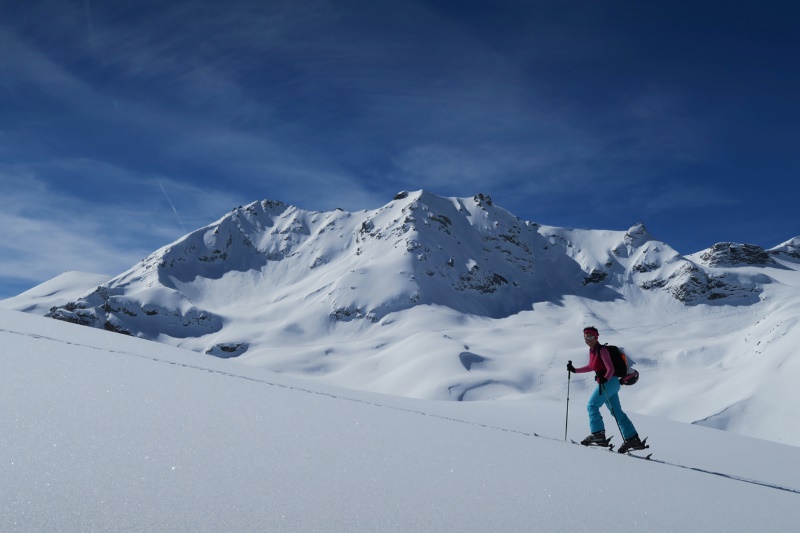
If you have one or more trail races planned this season, you are probably wondering how to optimise your training over winter. Rain, snow, cold and darkness can make your usual training terrain difficult, or even impossible, to use. And if you are a nature lover, you may eventually get tired of S&C or road running. Ski touring is a brilliant alternative for trail running training during the winter months. In this article, you will discover all the benefits of ski touring for trail running. You will see, it is fantastic for your training!
Contents
The benefits for your trail running training
What is ski touring?
Ski touring, also known as ski mountaineering or backcountry skiing, is a major asset for your trail running season preparation. Many elite athletes do plenty of it, including Kilian Jornet, François D’Haene and Jim Walmsley, who took it very seriously in 2023. It probably helped him win UTMB! And if the pros do it, there are plenty of good reasons why.
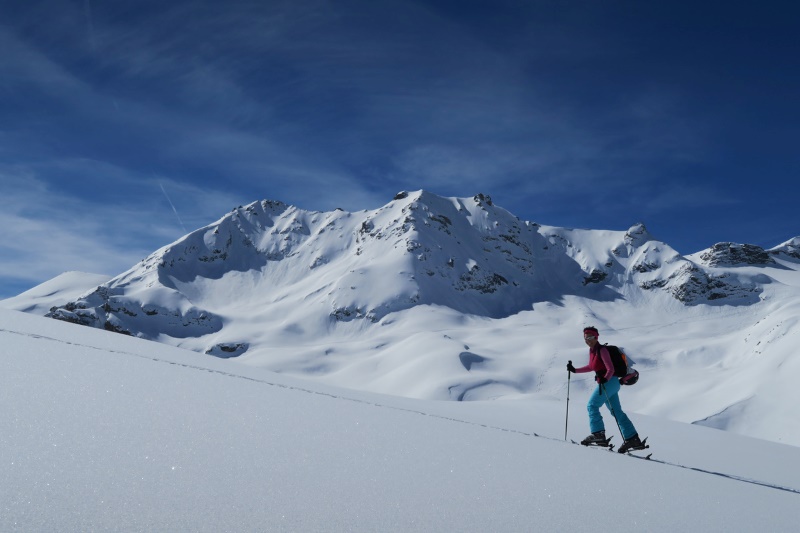
Put simply, ski touring involves climbing snowy slopes without ski lifts, with skis on your feet, then skiing back down. You attach what are known as climbing skins to the bottom of your skis, allowing you to move forward on the snow without sliding backwards. Don’t worry, it is only a name. Seal skins have not been used for a long time, modern skins are entirely synthetic!
So far, nothing too complicated. It is a lot like trail running with high-top trainers that are a little stiffer than carbon shoes, plus a pair of planks strapped underneath that glide through powder snow…
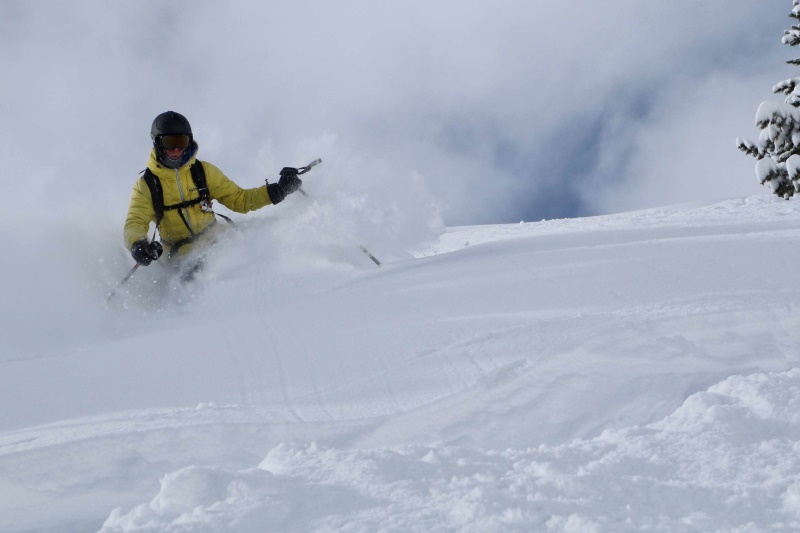
Well, it might be a bit more fun on the way down, right?
A similar movement pattern
When climbing in ski mountaineering, the movement is very close to trail running. The small difference is that you lift your foot less because you aim to glide the ski forward. This means you work almost the same muscles as you do on the trails! On top of that, you have the weight of the skis, skins, boots and backpack to carry, so it is all great work for your quads. That is one of the key benefits of ski touring for trail running, it helps you become seriously strong uphill!
The same goes for the descent, where you work the same muscles, mainly your glutes and quads. You are generally moving a little faster, which forces you to anticipate changes in the terrain more. You will see, that is another benefit of ski touring for trail running! You can compare descending to S&C exercises such as wall sits or squats. That does not mean you can skip all your S&C sessions, though… Yes, yes, we saw that coming!
How ski touring sessions compare to trail training
In general, a ski touring outing compares to an easy endurance or steady endurance training session, depending on your pace and fitness level. For example, a three-hour ski touring outing can easily replace a three to four-hour hike-run.
If you have plenty of experience, you can even do uphill intervals by alternating fast climbs with easier sections. Whether it is to wait for your slower friends from the Alpine Club, oops, or simply to push yourself, you will feel the benefits of ski touring for trail running in your next hill sessions! Two interval examples are 10 x 1 minute or 6 x 3 minutes, with recovery equal to the work interval.
A ski touring outing is generally quite long. An occasional skier will quickly be doing outings with at least 500 metres of elevation gain, while someone more experienced will soon reach over 1,000 metres of ascent. That means several hours in the mountains.
Another benefit of ski touring for trail running is that you train at altitude! These days, haha, finding snow below 1,300 to 1,500 metres can be tricky… Many trail races, including UTMB Mont-Blanc and the Diagonale des Fous, feature several sections at around 2,500 metres above sea level. It gives you the chance to see how your body responds to hard efforts at altitude before race day, and to get used to the sensations.
Getting started with ski touring: where to begin?
Your first ski touring outings
You do not necessarily need an excellent alpine skiing level to take up ski touring. To experience the benefits of ski touring for trail running, however, you should be able to ski confidently in all snow conditions. With a little practice, you will quickly get the hang of it!
If you have never tried ski touring, start with an outing alongside the pistes at a ski resort. It is not the most exciting option, but it does not require much equipment or technical knowledge, as you can easily rent gear and ski back down on the marked runs. When climbing, make sure you stay well to the side so you do not get in the way of lazy pass holders bombing downhill at full speed!
You can also contact a qualified mountain guide, who can teach you the basics of the sport away from groomed pistes. Alternatively, organisations such as the French Alpine Club, CAF, run group outings that you can join, including beginner-friendly trips.
Here is a quick tip: at first, the sharp uphill turn in ski touring, known as a kick turn, can be hard to understand. You slip, waste energy and tell yourself that you should have done more mobility work… But rest assured, you do not need a gymnast’s flexibility to nail your first kick turns like a pro! Do not hesitate to ask other skiers for advice on the famous heel-tapping technique.
A quick word on safety
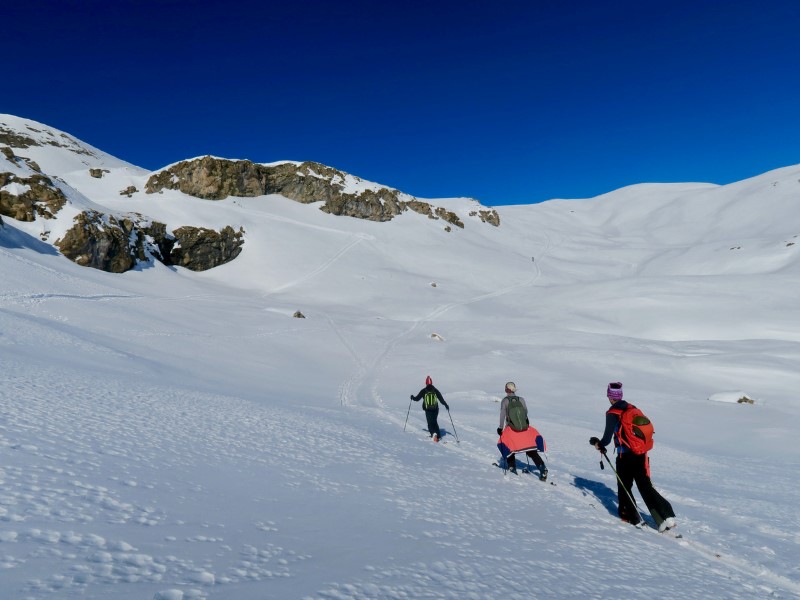
When ski touring, you are often deep in the mountains, surrounded by snow. Unlike ski resorts, slopes are not made safe every morning by ski patrol. You therefore need to assess the risks yourself, with a little help, and pay close attention to terrain changes and recent snowfall.
A good source of information is the Avalanche Risk Bulletin, available on the Météo France website or from the SLF in Switzerland. It provides an avalanche danger scale from 1 to 5. If none of the above sounds familiar, I strongly recommend checking their website before heading out on your first ski touring trips. This will help you avoid putting yourself or other mountain users at risk.
Going ski touring alone is risky. It is an additional risk you choose to take. Ideally, there should be at least two of you, so you can help each other in the event of an avalanche. If you have no other option, choose a well-frequented area and tell people you meet about your intended route. Of course, this does not exempt you from carrying the safety equipment discussed below.
A quick guide to ski touring equipment
Safety equipment
Whenever you go ski touring, or off-piste skiing for that matter, you must always carry your safety kit: an avalanche transceiver, a shovel and a probe. This means you can be found if you are buried in an avalanche, and you can find others too. Practise using this equipment from time to time so that you can be as effective as possible.
Touring skis and boots
Once this habit is in place, it is time to get into the practical side: skis and boots! Ski mountaineering equipment is designed to be lighter than resort ski equipment. It can feel strange at first and requires a short adjustment period on the descent.
Keep in mind that ski touring equipment can be quite expensive, but once you own your gear, you no longer have to buy lift passes!
You may be tempted to choose ultra-light gear, both skis and boots. The climb will feel easier, but always remember that the lighter it is, the trickier it can be on the way down. And for your trail running training, a little extra weight is not such a bad thing for your quads!
Make the most of ski touring for trail running
There you have it, you now have everything you need to train for trail running like a pro throughout winter! If you do a lot of ski touring, consider adding a few dynamic hamstring stretches after your outings. Ski touring tends to shorten your hamstrings and, in turn, your stride length!
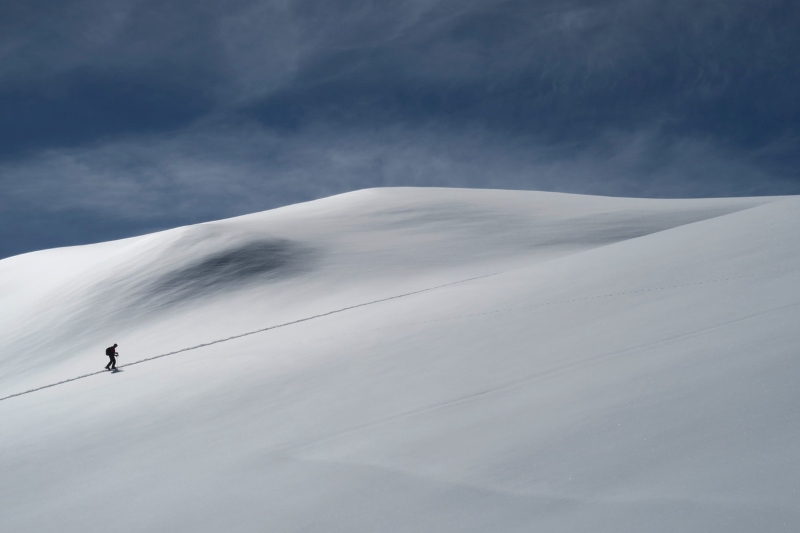
Ski touring is excellent cross-training for trail running. Just like cycling in the warmer months, it improves your fitness while placing less stress on your joints, at least on the climb. Overall, you will find the same trail running spirit in the mountains, even when they are covered in snow. So this winter, make the most of all the benefits ski touring has to offer for trail running!
With the new version 7.1 and the premium plan, you can now add ski touring outings to your trail running training plan! There is nothing better for a great winter, and do not forget your S&C 😉
Enjoy the skiing, and Arvi’pa, as we say in the mountains of Savoie!
Photo credits: Philippe Arnaud