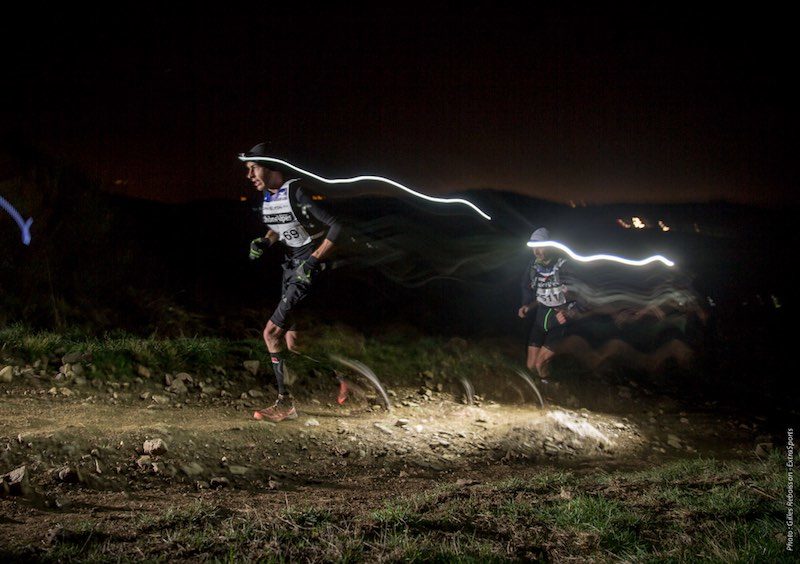
Running at night always feels a bit special. Maybe you sometimes have to train after dark because of a packed schedule, or in winter when the sun sets early. You can also head out for an early-morning trail run to catch the sunrise. Here are a few key tips to help you enjoy night running safely, and turn it into a real performance boost for your endurance training.
Two golden rules: see well, and be seen.
Contents
Night running: see the path clearly
To see properly at night, the must-have piece of gear is a lighting system that fits your run.
The recommended setup is a headlamp, or a chest-mounted light. Check brightness and battery life (rechargeable or batteries). If it’s very cold, battery life can drop fast, so bring a backup headlamp or a spare battery.
Look at the headlamp’s brightness, measured in lumens. For night running, go for headlamps in the 100 to 200 lumen range, and even more for trail running (400+ lumens). Some headlamps even adapt to ambient light, they boost output in full darkness and dim near streetlights. That improves visual comfort and helps save battery during long runs.
If you start your run just before sunset, don’t get caught out when the light drops quickly. If you’re unsure, slip a headlamp into your pocket.
Night running: stay visible
To be seen clearly at night, the essential gear is reflective clothing.
We also recommend reflective gear, especially on your back if you’re running near traffic or on quieter roads. Being visible from far away is one of the biggest night-running safety wins.
You’ll find reflective or high-visibility jackets, vests, and even compression socks with reflective thread, like NightTech CEP socks. For jackets, CRAFT offers reflective products that help you stand out during evening runs.
If you’re on a tighter budget, reflective armbands work great too, and they’re sometimes handed out at races.
At night, dress warm
At night, temperatures drop quickly, especially in autumn and winter. Wear warm, breathable running gear, ideally with a smart layering system (technical base layer, mid-layer, and an outer shell if needed). If you’re heading out early, bring a jacket, you can always stash it later in a pack or tie it around your waist.
Check out our tips on how to run in winter and cold weather, including how to protect your hands, head, and feet with gloves, a beanie, and proper socks.
In night trail races, mandatory kit often includes an emergency blanket. It’s essential if you ever have to stop and wait without moving. In training, you can bring one too if you’re heading far from home, it takes almost no space.
Night running in races
Also check our advice for running a race with a night start, like the SaintéLyon (a legendary French night trail) or long-distance trail events. If you’re racing at night, scout the course in advance if possible, and do a few night sessions so your eyes and pacing adapt to the dark.
Plan your route
At night, your landmarks change. Plan your route carefully so you don’t get lost or end up in risky places. That matters in nature (cliffs, holes, faint paths) as much as in the city or suburban areas (places that can feel unsafe). Bring your phone for GPS tracking and in case of an emergency.
It can also feel more reassuring to head out as a pair for night runs.
Night running: an experience that changes everything
At night, it often feels like everything is moving faster. You’ll get used to the darkness quickly, and your senses sharpen.
Two important tips: look far enough ahead to anticipate obstacles, and shorten your stride to stay stable and efficient.
With these tips, night running becomes a great way to train, improve endurance performance, and clear your head, safely.