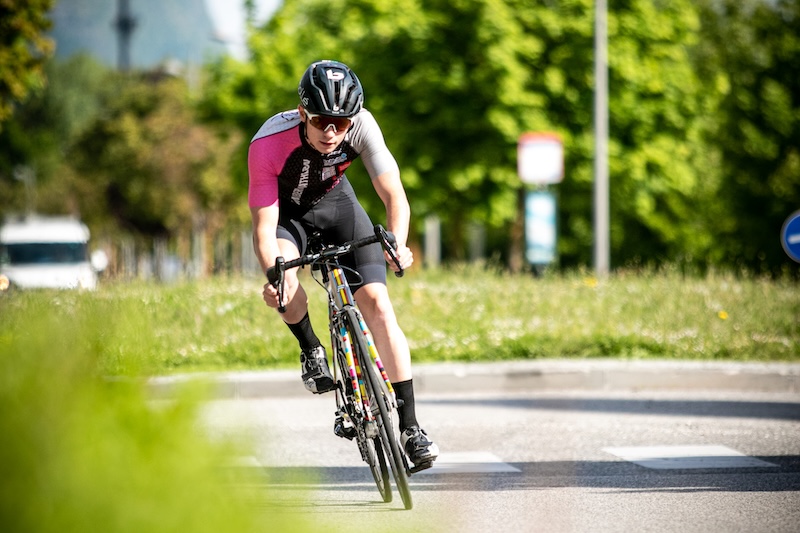
Taking on your first triathlon is an exciting endurance challenge that combines swimming, cycling, and running. As a beginner, the main goal is not raw performance, it is to cross the finish line feeling proud, having fun, and without suffering the whole way.
Smart preparation is key if you want to avoid the classic mistakes and make your very first race a great experience.
Contents
Choosing the right distance for your first triathlon
Even if Ironman and Half Ironman events are legendary and inspiring, it is strongly not recommended to start with such long formats for your first triathlon. To begin, choose a distance that matches your current fitness and training time:
- XS Triathlon (try-it format): 400 m swim, 10 km bike, 2.5 km run
- S Triathlon (Sprint): 750 m swim, 20 km bike, 5 km run
- Super sprint triathlon (less common but sometimes available): a discovery format, ultra fast
Our recommendation: the Sprint (S) is the best way to start. XS or shorter can feel frustrating because the distances are so short that your body barely has time to settle in. Transitions can also feel more stressful when everything happens at high speed.
How to train effectively for your first triathlon
Triathlon is built on three disciplines, you need to train them separately, but also learn how they connect as one endurance sport.
Swimming
The biggest priorities in swimming are breathing and open-water practice. On race day, you will almost never swim in a pool, so you need to get comfortable in real conditions for your first triathlon.
What changes in open water compared to the pool:
- Losing your usual references (walls, floor lines, tiles)
- Water temperature
- Distance perception: you cannot “steal” a few meters by pushing off the wall anymore
- Current and chop
- Mass start
Below 16°C (about 61°F), wearing a wetsuit is mandatory for safety. It also changes the feel a lot because mobility is reduced and buoyancy is higher.
Cycling
For strong bike training, the main focus is building your aerobic endurance with long rides (2 to 2.5 hours). Most of your bike prep should be based on these sessions. As a beginner, workouts like strength endurance, max strength, or threshold intervals are not the priority since you are not chasing a specific time yet. You can add those later to improve your pace and performance.
Running
Run sessions require the least time and logistics compared to swimming and cycling, which makes them easier to fit into your weekly training plan. The key is to run consistently, and if possible, include runs right after a bike ride.
Our advice: let go of your usual time goals and do not expect to beat your old PR at that distance. You will be carrying fatigue, and your legs will feel heavier after the bike.
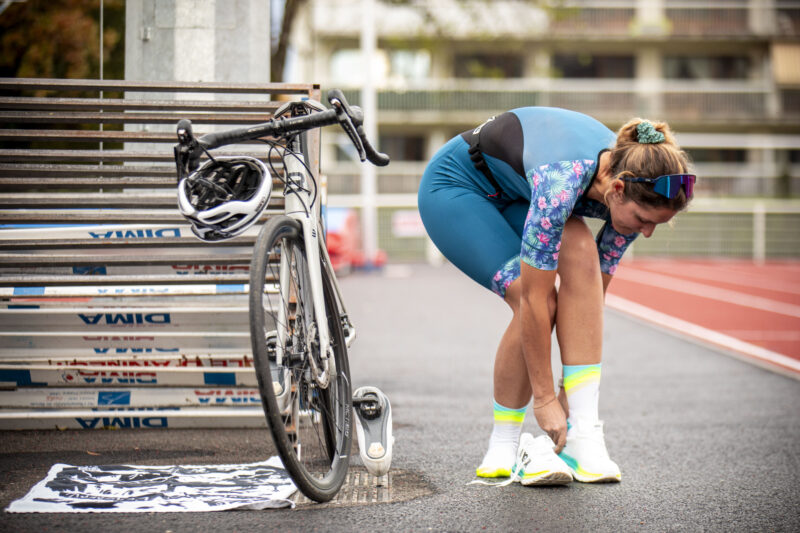
Brick workouts
To get used to that famous back-to-back feeling, do not be afraid to actually stack sessions. That is the whole point of brick workouts, they link bike + run or swim + bike.
The goal is to train your body to handle the switch in muscle recruitment and energy systems.
Training for your first triathlon is all about finding the right balance between swimming, biking, and running, while learning how to manage transitions between disciplines. Discover how to organize your triathlon training week.
For beginners, it is not always easy to structure your training weeks or know which sessions to prioritize based on your level and goal. RunMotion Coach supports your build-up with a 100% personalized triathlon training plan adapted to your level, your objective, and your availability.
Essential gear for your first triathlon
At first glance, triathlon can look expensive, which can be discouraging. Good news, you do not need pro-level equipment to get started. However, a few items are essential:
- Swim goggles
- Wetsuit or a tri-suit (triathlon suit)
- Ideally a road bike, or a mountain bike if that is what you have
- Helmet
- Comfortable running shoes
- A race belt (bib belt)
⚠️ Do not try any new gear on race day. You could get nasty surprises, and it could even ruin your race.
Race day: how to handle your first triathlon
Before the race
Arrive early to scout the venue and the course specifics. Rules are strict around transition areas and procedures, so take time to understand everything to avoid a penalty or even disqualification in your first triathlon.
Check whether there is a pre-race briefing, and do not miss it for anything. All the key information will be covered, and even if you think you already know it, a quick reminder always helps.
Then set up your gear in a smart order with, of course, whatever you will use first on top. For example, lay out your socks and place them above your shoes if you plan to put socks on first.
During the race
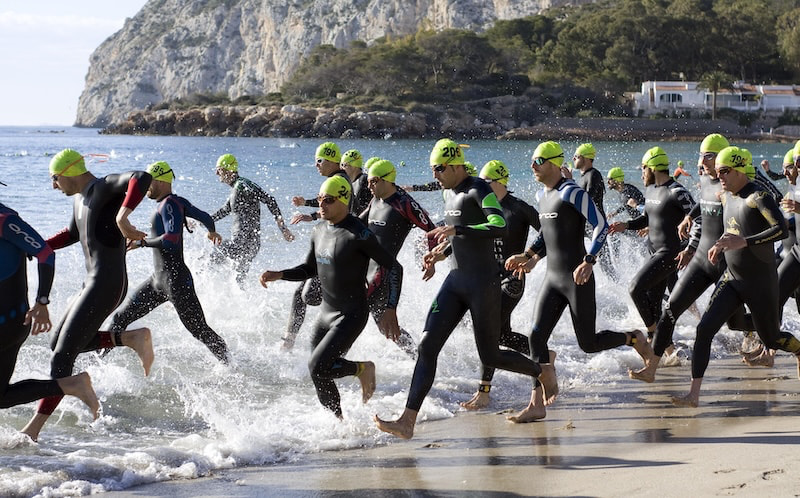
As mentioned earlier, the swim start can be intimidating and can leave you a bit shaken. So do not go out too hard. Take a moment to find your place in the pack and avoid stray kicks and contact.
On the bike, hold a steady effort and ease up as you approach the second transition (T2). Do not blow up your legs by sprinting the final stretch of the bike, you will pay for it on the run.
Mistakes to avoid in your first triathlon
You now know the essentials to start triathlon the right way. Here is a quick recap of the mistakes you really want to avoid:
- Do not start the swim too fast, it is the easiest way to get out of breath, panic, and burn energy
- Underestimating how important transitions are
- Trying anything new on race day (even small things like socks)
- Underestimating bike fatigue
- Forgetting to hydrate
Conclusion
You now have everything you need to succeed in your first triathlon. The three secrets are progressive training, smart pacing, and a solid training plan.
RunMotion Coach supports your prep with a structured training plan that is 100% adaptable. Learning to balance the three sports might be the toughest part of triathlon training, but that is exactly why we are here. Your virtual coach keeps you motivated, gives you guidance, and will make you love the process.