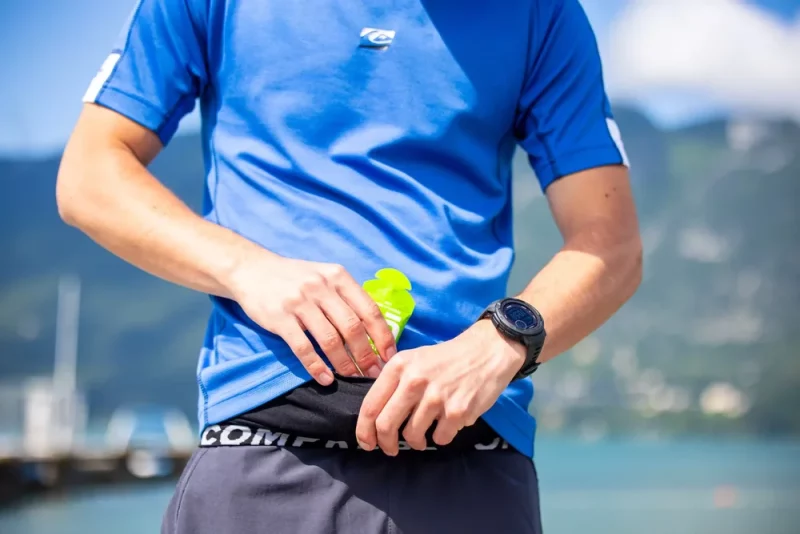
Triathlon nutrition is often the factor that makes the difference between a race you control and a battle to simply make it to the finish. Whether you are preparing for a sprint triathlon, Olympic-distance race, Half Ironman or full Ironman, fueling properly before, during and after your event is essential for maintaining energy, preventing cramps and optimising performance.
In this complete guide, discover how to manage your triathlon nutrition and hydration, with practical advice, real-world examples and common mistakes to avoid.
Contents
Why is nutrition essential in triathlon?
Triathlon combines swimming, cycling and running over several hours of effort. Your body uses a huge amount of energy, and glycogen stores can drop quickly when your nutrition strategy is not properly adapted.
In long-distance events, a poor fueling strategy can quickly affect both performance and recovery.
Poor sports nutrition can lead to a major energy drop, the dreaded “bonk”, as well as digestive issues, cramps, dehydration and a significant decline in performance during the final stages of the race.
On the other hand, a well-planned nutrition strategy helps maintain steadier energy levels, improve endurance, support post-race recovery and reduce the risk of a late-race collapse.
Nutrition before a triathlon: build your energy stores
The days before the race
During the 2 to 3 days before your triathlon, the goal is to gradually increase your muscle glycogen stores.
This phase is especially important before a long-distance triathlon or Ironman, where energy demands will be very high.
Focus mainly on complex carbohydrates:
- rice
- pasta
- potatoes
- quinoa
This helps maximise your energy stores before race day. Good hydration, along with simple and easy-to-digest meals, is also essential in the days leading up to the start.
In contrast, it is best to avoid very fatty foods, alcohol, excessive fibre intake and any new products you have never tested before.
Breakfast before the start
Your final meal should be eaten around 3 hours before the start.
The aim is to provide enough energy without upsetting your digestion before the race.
Here is an example of a complete breakfast for a long triathlon effort: bread or oats for carbohydrates, a banana, a little honey or jam, yoghurt or a plant-based drink, plus coffee if you are used to having it.
Triathlon nutrition: what to eat and drink during the race
Hydration
Even mild dehydration can reduce performance.
During a triathlon, it is recommended to drink regularly, ideally between 500 and 750 ml per hour depending on the heat and your sweat rate. A drink containing sodium and electrolytes is especially useful for long-duration events. In most cases, taking small sips every 10 to 15 minutes is more effective than drinking large amounts at wider intervals.
Drinking regularly also helps your body absorb the carbohydrates consumed during exercise.
Fueling
Carbohydrates remain your main source of fuel during exercise.
To maintain stable energy levels, carbohydrate intake should be consistent throughout the race.
Recommended target:
- 30 to 60 g of carbohydrates per hour for shorter events
- up to 90 g per hour for long-distance racing, with gut training
The best options during exercise are usually energy gels, isotonic drinks, fruit chews, easy-to-chew energy bars, bananas and fruit purées. The most important thing is to choose products you have already tested in training, so you can avoid unpleasant digestive surprises on race day.
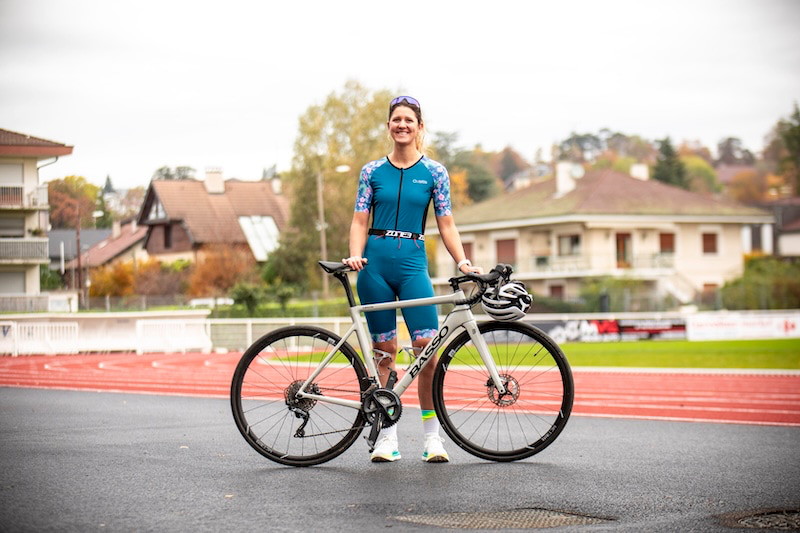
Nutrition for each triathlon discipline
Swim nutrition
Fueling opportunities are limited during the swim, so your preparation before the start is crucial.
For long-distance events, taking a small energy gel just before getting into the water can be useful.
Bike nutrition: the key moment
The bike leg is the ideal time to fuel properly.
Why?
- more consistent intensity
- easier digestion
- easy access to bottles and nutrition
It is often during the bike leg that you build the success of your final Ironman marathon.
Adjust your fueling to intensity: the digestion tip
Digestive tolerance varies greatly depending on exercise intensity. In triathlon, especially on the bike, changes in pace such as surges, descents and climbs directly affect digestion.
One simple rule can help: favour liquids or gels during high-intensity sections or descents, then save solid foods for steadier moments, such as the start of a climb or flatter sections. This can often help you manage digestion more effectively during the race.
The goal is to limit digestive issues and improve energy absorption throughout your effort.
Run nutrition
During the run, digestion becomes more difficult. Prioritise:
- easy-to-absorb gels
- energy drinks
- frequent, small amounts at aid stations
The aim is to avoid energy crashes while limiting digestive discomfort.
Example nutrition strategy for a long-distance triathlon
Before the race
- Breakfast 3 hours before the start
- Regular hydration
- 1 gel 10 minutes before the start
Bike
The bike leg is generally when it is easiest to consume enough carbohydrates and fluids. It is important to fuel proactively rather than waiting until you feel hungry.
- 60 to 90 g of carbohydrates per hour
- 1 bottle of isotonic drink per hour
- alternate solid and liquid fuel
Run
Once you are on the run, digestion often becomes more sensitive. It is better to fuel frequently in small amounts.
- 1 gel every 30 to 40 minutes
- water at every aid station
- electrolytes in hot conditions
Common triathlon nutrition mistakes
- Trying a new product on race day: using a gel or drink you have never tested in training. The rule is simple: nothing new on race day.
- Waiting until you are hungry or thirsty: by the time hunger or thirst appears, it is often already too late. You need to plan your nutrition intake ahead and drink regularly throughout the event.
- Neglecting sodium: salt losses can be substantial, especially in summer. Electrolytes play an essential role in cramp prevention and maintaining hydration.
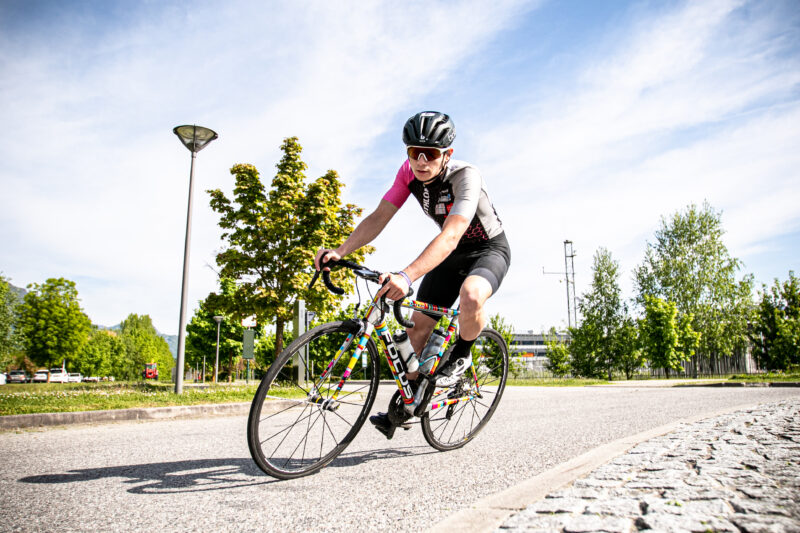
How to test your nutrition before a triathlon
Your nutrition strategy needs to be trained, just like every other aspect of triathlon.
During long training sessions:
- test your gels and drinks
- train your gut
- measure your fluid needs
- write down what works
These sessions help you identify what you tolerate best and gradually fine-tune your strategy before race day.
Plan your triathlon training with RunMotion Coach
Nutrition is an integral part of performance. But to make lasting progress in triathlon, you also need to structure your training intelligently.
The RunMotion Coach app allows you to follow a personalised training plan based on your goal, fitness level and availability. Whether you are preparing for your first triathlon or an Ironman, you benefit from adaptable coaching and precise progress tracking.
Completing a successful triathlon is not only about training. The right nutrition before, during and after the race is essential for maintaining your energy and avoiding a late-race breakdown.
The most important thing is to build a personalised strategy and test it in training. Hydration, carbohydrates, electrolytes and recovery are the pillars of a successful performance.
By combining structured training with a well-managed nutrition strategy, you maximise your chances of reaching your goals on race day.