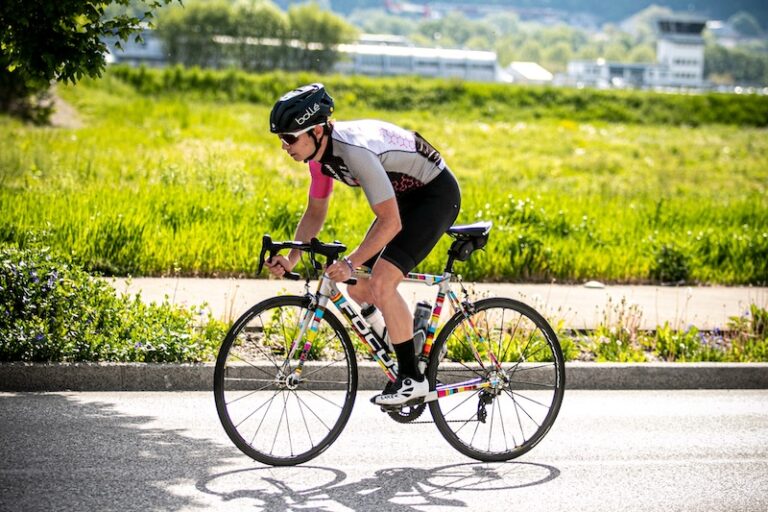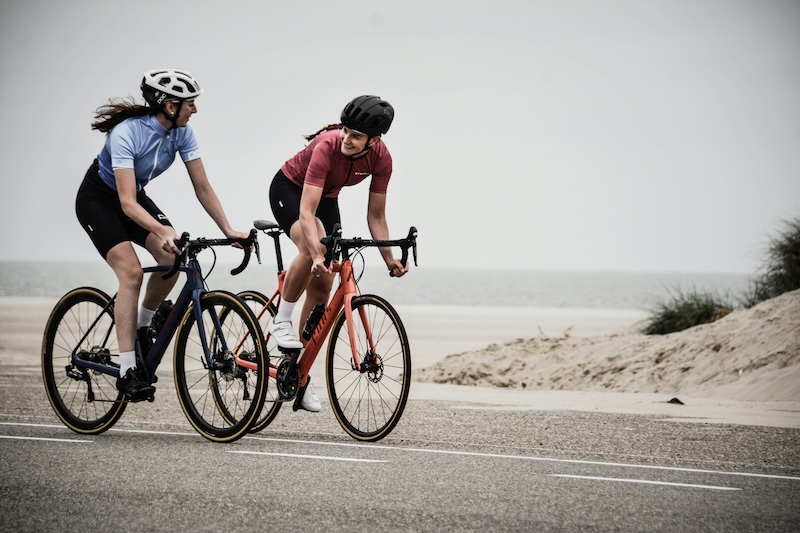
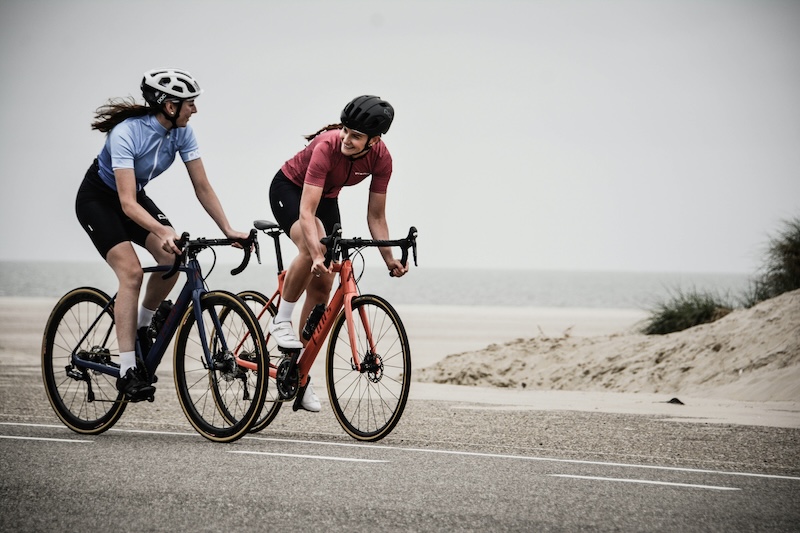
Cycling is the longest leg of a triathlon. It is also the discipline where you can make the biggest time gains. Whether you are training for a sprint triathlon, a half-distance triathlon, or an Ironman, improving your bike performance will not only help you ride faster, it will also set you up to start the run with fresher legs.
Contents
Build your cycling endurance first
Before chasing more speed, it is essential to build a strong aerobic endurance base. To improve on the bike, most rides should be done at a comfortable intensity, where you can still hold a conversation. These sessions improve your ability to sustain effort for several hours and form the foundation of any triathlon training plan.
Week after week, gradually extend your long rides so your body can adapt to the demands of your goal race.
Do not ride at the same pace every time
If every ride is done at a moderate pace, your progress will quickly stall. Just like running, cycling performance improves when you train with an alternation of intensities.
Short intervals build power, while longer threshold efforts improve your ability to hold a strong pace. By mixing up your workouts, you will improve for both short-course triathlon and long-distance racing.
Work on your cadence
Cadence is the number of pedal revolutions per minute. A smooth cadence places more of the load on your cardiovascular system while reducing muscular fatigue.
Every triathlete has a natural cadence, but learning to pedal between 80 and 95 rpm is often a good benchmark on flat terrain. The goal is not to force an exact number, but to find a pedaling rate that feels efficient and comfortable.
Improve your cycling with hill work
Triathlon courses are not always flat. To get better on the bike, it is important to include some climbing too. Hills naturally build strength, improve your pedal stroke, and strengthen the muscles you rely on during long rides. A few repeats on a steady hill can be a very effective replacement for a dedicated strength workout.
Add a run off the bike
One of the unique demands of triathlon is having to run immediately after the bike. The famous “brick sessions” help your legs gradually adapt to this specific transition. There is no need to run for long, 10 to 20 minutes is often enough to reconnect with the unique feeling of the bike-to-run transition.
Optimize your bike position
A good position on the bike helps you produce more power while improving aerodynamics and comfort. Many triathletes lose valuable minutes simply because they ride in an inefficient position. That is why it is worth checking your setup with a bike fit, especially if you are preparing for a half-distance triathlon or an Ironman.
Use a structured training plan to improve
For long-term progress, it is important to alternate endurance rides, quality sessions, and recovery periods.
The RunMotion Coach triathlon training plans include bike sessions tailored to your level and your goal. The workouts progress gradually over the weeks and fit alongside your swim and run sessions to create balanced triathlon training.
In the app, choose the days when you want to train on the bike. Then, for each day, specify whether you want to ride a road bike, gravel bike, mountain bike, or an indoor trainer, and what you want to work on, endurance, strength, or simply let your coach decide.
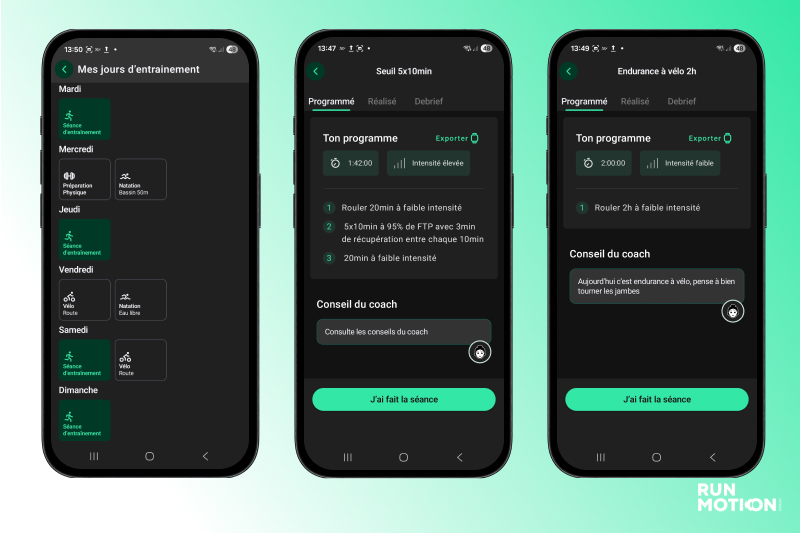
Here is an example of bike workouts to improve your cycling that you can find in the RunMotion Coach app (available with the premium version):
Road bike session to build endurance
Ride for 2 hours at low intensity
Road bike session to work on intensity
Ride 20 minutes at low intensity
5 x 10 minutes at 95% of FTP with 3 minutes of recovery between each 10-minute block
20 minutes at low intensity
Key takeaways to improve your triathlon cycling
Improving on the bike is not just about riding more. Workout variety, the quality of your pedal stroke, hill work, and an optimized position all help you become more efficient while arriving at the run with fresher legs.
With structured, consistent training, progress often comes quickly, no matter your level.