The Tour du Mont Blanc (TMB) is one of the most famous long-distance hikes in the world. The scenery is unreal, and the route takes you through France, Italy, and Switzerland. A big chunk of the Tour du Mont Blanc is also used by the UTMB, the legendary ultra-trail race around Mont Blanc. Want to take on the adventure as a hiker, or in a hike-run format? Here are our best tips to help you crush your Tour du Mont Blanc.
Contents
How long does it take to do the Tour du Mont Blanc?
Hikers from all over the world come to tackle these paths around Mont Blanc. The TMB is about 170 km with roughly 10,000 m of elevation gain. Most people complete the Tour du Mont Blanc in 6 to 10 days, around 17 to 28 km per day. That means you need a solid fitness base, and you should expect 4 to 8 hours of hiking per day.
If you’re going with someone less sporty than you, really put yourself in their shoes when planning the itinerary. Someone with strong fitness and experience hiking in the mountains can aim for 6 days. Someone with average fitness, little mountain experience, or who simply wants to take it slow should plan for 8 to 10 days.
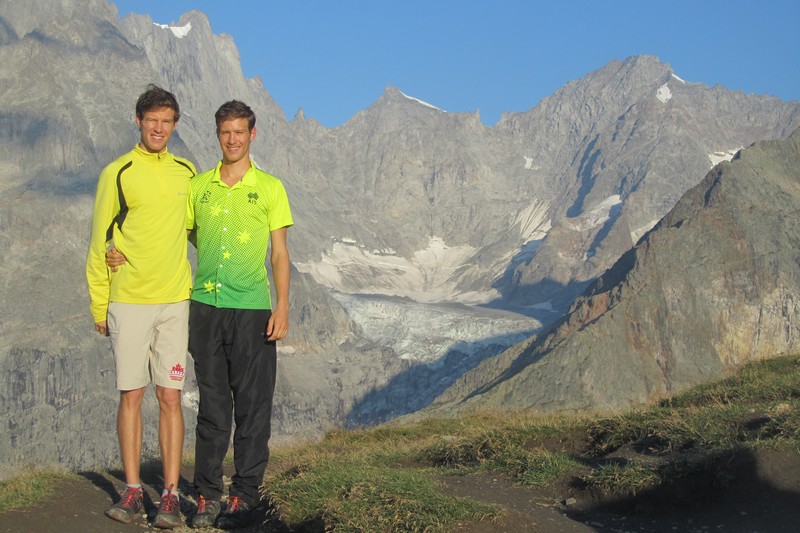
Experienced hikers can target 4 to 5 days. Four days is what Guillaume and I did in 2015. Hiking only, that means massive days, around 40 to 50 km on foot. If you want to alternate hiking and running, for example as UTMB preparation, you can aim for 3 to 4 days.
Our Tour du Mont Blanc experience in 4 days
Day 1 of the TMB: around 40 km
Having grown up in the mountains and training regularly with strong endurance, Guillaume and I decided to go for the Tour du Mont Blanc as a hiking adventure. It’s an unforgettable memory, breathtaking landscapes, marmot sightings, a real sense of freedom, and yes, a bit of suffering too.
We started from Les Houches, a common starting point for the Tour du Mont Blanc. The first stage climbs to Col de Voza, then drops toward Saint-Gervais-les-Bains and on to Les Contamines. Things get serious near Col du Bonhomme, after a long ascent from the old Roman road down in the valley. That day, it’s raining, and the Refuge de la Croix du Bonhomme is a perfect stop to refuel and warm up. Then it’s time to descend toward Les Chapieux. The downhill is steep and really hammers your legs. The weather clears toward the end of the day, and we make it to Refuge des Mottets just in time for dinner.
Day 2 of the TMB: around 40 km
Day 2 is all about crossing Col de la Seigne and stepping over the border into Italy. The climb is steep, but early in the day it goes down well. On the Italian side, you can spot plenty of marmots in the scree fields on the descent toward Lacs Combal, sometimes you really have to look closely, like in the photo below. Then it kicks up again for a few kilometers before dropping into Courmayeur, a long, steep descent. Perfect moment for a lunch break in Courmayeur.
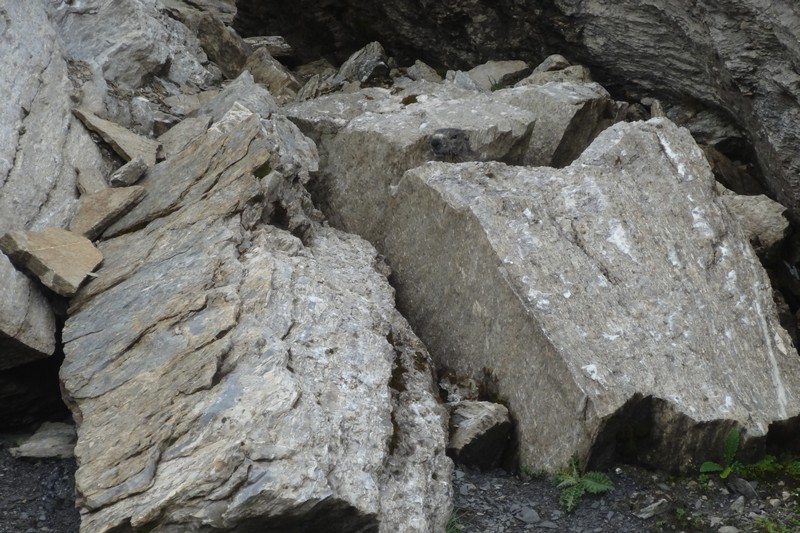
We set off again, and we get lost for almost an hour above Courmayeur. On top of the navigation mistakes, we realize that the time estimates on Italian signposts are a lot tougher than in France. In France, if you hike fast you can almost cut the listed time in half. In Italy, even when you push the pace, it’s hard to shave off more than a few minutes. We finish the day at Refuge Elena, the last hut on the Italian side.
Day 3 of the TMB: around 45 km
We misjudged Day 2, so we have to work hard on Day 3 to make up time and reach Vallorcine. Very early start, we open the day by crossing Grand Col Ferret. Once we cross into Switzerland at the pass, we descend to La Fouly, then head toward Champex and its lake. We climb over the Catogne area before dropping down to Trient.
Normally, Trient is where we recommend spending the night. We pushed all the way to Vallorcine on Day 3, but it was brutally tough. It’s smarter to save some energy for Day 4.
Day 4 of the TMB: around 40 km
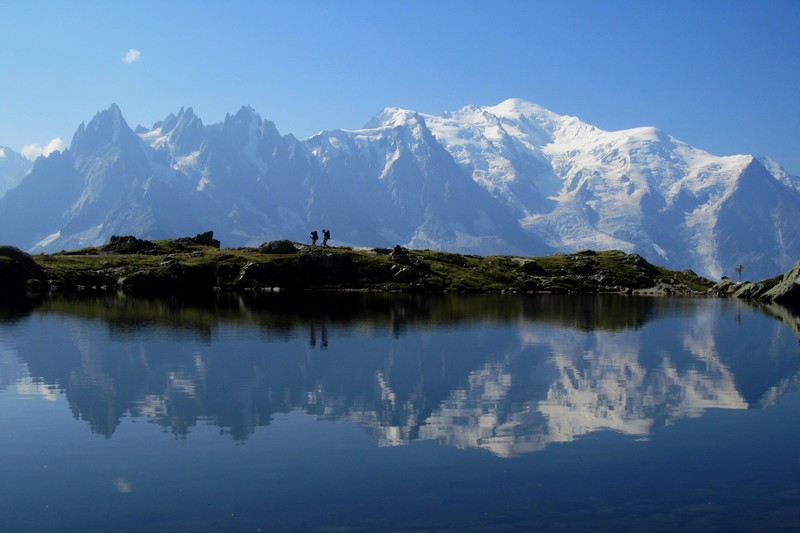
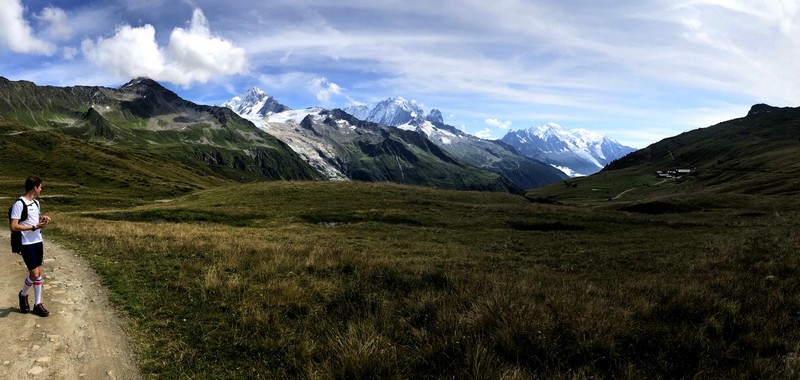
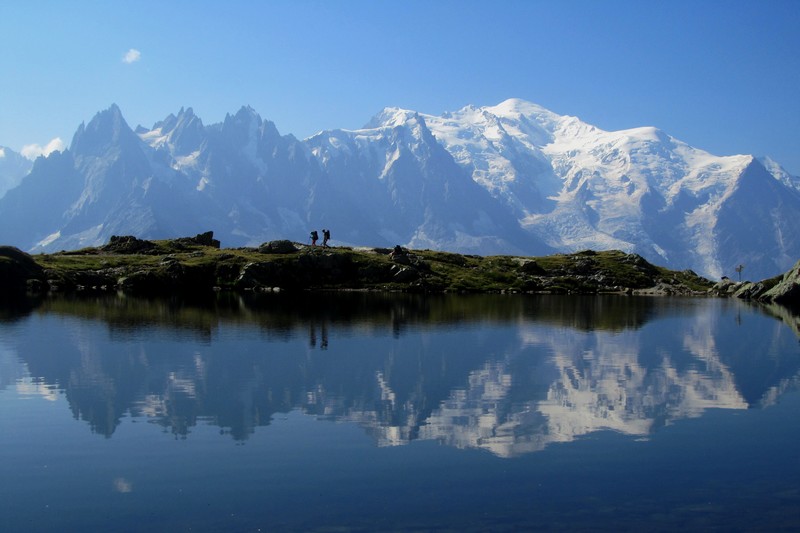
You can go via Aiguillette des Posettes for an exceptional view of the Mont Blanc massif. The final stretch takes you to Tête aux Vents, a classic section near the end of the UTMB course. It’s also highly recommended to pass by Lac Blanc, a true postcard view facing Mont Blanc.
You can keep going along the balconies facing Mont Blanc up to Le Brévent, then start the final descent to Les Houches, it feels endless when your adventure is coming to an end. It can be hot, and the trails are often exposed to the sun. If you want to go through Chamonix, you can drop down a little earlier and do the last 10 km on flat terrain to Les Houches.
In 4 days, you can break it down like this:
Les Houches – Refuge des Mottets
Refuge des Mottets – Refuge Elena
Refuge Elena – Trient
Trient – Les Houches
For Day 1, make sure you start before 8 a.m. This is only for very well-trained athletes. This is an example that worked for us, but we take no responsibility for your plan. Double-check hut availability, and remember that bad weather may force you to take shelter for a while, which can slow you down.
As UTMB course reconnaissance, we also did the Tour du Mont Blanc in 3 days in a hike-run, trail training style. That means 50 to 60 km per day: Chamonix – Les Chapieux, Les Chapieux – La Fouly, La Fouly – Chamonix.
How to plan your TMB stages
Before you leave, it’s important to plan your itinerary properly. Specialized TMB sites like MonTourduMontBlanc can help you organize everything. Some people choose a luggage transfer option, but either way we strongly recommend booking your mountain huts and arriving before 7 p.m., which is often dinner time.
The landscapes and building styles are noticeably different between France, Italy, and Switzerland, you’ll be blown away. As mentioned earlier, pay attention to differences in official hiking times depending on the country, very tough in Italy and very generous in France.
Also look into possible bus shortcuts if someone in your group struggles (bus between Les Chapieux and Les Mottets, between Lacs Combal and Courmayeur, between La Fouly and Champex, between Chamonix and Les Houches, etc.).
Choosing the right gear for the Tour du Mont Blanc
Choosing the right gear matters, and it depends on how many days you plan to take. Don’t overpack and weigh yourself down, but bring enough to stay comfortable in any mountain weather. We highly recommend a waterproof jacket, an emergency blanket, an Opinel pocket knife, a few spare clothes, and more.
Before your Tour du Mont Blanc, also make sure you regularly hike with a backpack loaded to the weight you’ll carry during your trip. It’s key for endurance, comfort, and injury prevention.
Here are some useful items we mentioned in our article on randonnée en itinérancemulti-day trekking:
- Sleeping: a tent, hammock, tarp, sleeping bag, pillow, etc.
- Eating: a stove, fuel, lighter, food container, utensils, soft flasks or a CamelBak, etc.
- Clothing: t-shirt, shorts, arm warmers, cap, socks, underwear, waterproof jacket and pants, warm layers, etc.
- Hygiene: toothpaste, toothbrush, toilet paper, sunscreen, etc.
- First aid: a small kit with plasters, disinfectant, tick remover, small scissors, bandages, anti-chafe cream, an emergency blanket, etc.
- Navigation: a GPS watch with the route, mobile phone, power bank, charger, extra batteries, a map, etc.
You don’t need mountaineering equipment, the trails are very runnable and hikeable. If you go before July, you might consider microspikes if there’s still snow on the high passes, some reach around 2,500 m.
We wish you an amazing Tour du Mont Blanc. The key is to enjoy it and stay safe. Your eyes are in for a treat.
And who knows, it might make you want to débuter le trailstart trail running, or keep leveling up your trail performance with a trail running training plan.